What AI Can’t Fix in Mobile Engineering

Note: This article is part of my ongoing newsletter series, Building MAI, where I’m sharing lessons from building a Kotlin Multiplatform, AI-powered mobile app. In the previous post, I explored how AI tools accelerate mobile development and why experience still matters. This piece continues that conversation by focusing on what AI can’t fix in mobile engineering.
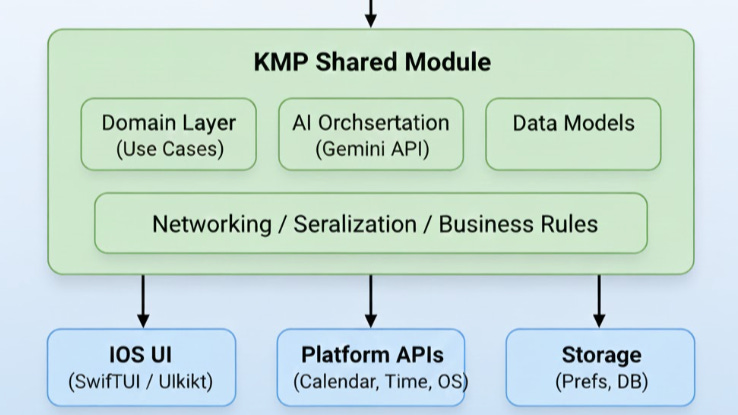
AI tools have fundamentally changed how we write code. From generating boilerplate to scaffolding entire features, they’ve become a powerful part of the modern developer workflow. I’ve used them extensively while building MAI, a Kotlin Multiplatform personal mobile app that integrates AI directly into the product itself.
And yet, after months of building with AI in the loop, one thing is very clear to me: AI doesn’t fix the most complex parts of mobile engineering. It accelerates execution, but it doesn’t replace judgment, context, or experience. Here’s where AI still falls short, and why fundamentals matter more than ever.
1. AI can’t replace platform intuition
Mobile engineering is deeply platform-specific. Android and iOS aren’t just different SDKs; they have different philosophies, lifecycle expectations, and implicit assumptions.
While building MAI, I ran into iOS-specific issues around:
calendar APIs
time and timezone handling
platform behaviors that don’t exist on Android
AI could generate syntactically correct code, but it couldn’t tell me:
whether the behavior made sense for iOS users - I had to go back and check and ensure the app feels iOS
if the API usage aligned with platform norms
how edge cases would surface in real-world usage
That intuition only comes from experience. AI doesn’t feel when something is wrong; it waits for you to notice.
2. AI doesn’t understand product intent
AI is excellent at answering how questions. It struggles with why. In mobile apps, the hardest decisions aren’t:
“How do I call this API?”
“How do I structure this class?”
They are questions like:
Should this interaction be synchronous or asynchronous?
Is this AI response fast enough to feel helpful?
Does this feature reduce cognitive load or add to it?
AI will happily generate a solution even if the solution doesn’t serve the user experience. Engineers still have to define intent, boundaries, and tradeoffs.
3. AI can’t debug ambiguity
Some bugs aren’t logical; they’re contextual.
For example:
a date that’s technically correct but wrong for the user’s locale
a calendar event that saves but doesn’t appear where expected
a UI that works in isolation but fails in a real navigation flow
AI can suggest fixes, but it can’t observe behavior the way a human can. Debugging mobile apps often requires:
reproducing issues across devices
Understanding lifecycle timing
reasoning about state over time
That kind of ambiguity is still a human problem.
4. AI doesn’t teach fundamentals it assumes them
One of the biggest misconceptions is that AI levels the playing field for all developers. In practice, I’ve found the opposite.
AI made me significantly faster because:
I knew what to ask for
I knew when the output was wrong
I could redirect it precisely
When AI generated incorrect code, it took me minutes to say:
“This is wrong because of X. Fix it this way instead.”
For less experienced developers, that feedback loop is much harder. If you don’t yet understand why something is broken, AI won’t magically provide that understanding.
AI amplifies experience. It doesn’t replace it.
5. AI can’t design resilient architectures
Mobile apps live in hostile environments:
flaky networks
background execution limits
battery constraints
OS-level interruptions
Architectural decisions state management, error handling, and offline strategies require anticipating failure. AI can generate architecture diagrams and patterns, but it doesn’t:
reason about long-term maintenance
anticipate scale-related pain
understand the cost of future changes
Those decisions still come from engineers who’ve lived through production incidents.
6. AI doesn’t remove accountability
At the end of the day, engineers still ship the code. When something breaks in production:
AI isn’t on call
AI doesn’t respond to App Store rejections
AI doesn’t explain outages to stakeholders
AI will not know if an API Auth error was handled
AI will not ship to prod - as for now
Tools can help you move faster, but responsibility still sits with the human who understands the system.
What AI does do well
To be clear, AI is incredibly valuable when used correctly. It excels at:
reducing boilerplate
accelerating prototyping
offering alternative implementations
acting as a second set of eyes
But it works best when paired with:
strong fundamentals
clear intent
platform knowledge
Final thoughts
Building MAI reinforced something I deeply believe:
The future of mobile engineering isn’t about replacing engineers with AI it’s about engineers who know how to use AI well.
The engineers who benefit most won’t be the ones who rely on AI blindly, but the ones who can challenge it, guide it, and recognize when it’s wrong.
AI won’t fix:
unclear thinking
weak fundamentals
lack of platform understanding
But in the hands of experienced engineers, it can remove friction and unlock real productivity. And that’s where the real shift is happening.